First post in a loooong time, but with much discussion about "merit" in regards to Trudeau's gender parity in cabinet commitment I decided to do digging to demonstrate that yes, on merit Trudeau could appoint a 100% female cabinet because of the depth of the Liberal caucus.
Here are some of the names that come up in articles for a Google search for "Trudeau cabinet", the province they represent, and a brief description of their bio:
Full link to image here, with news sources
A list of potential Ministry quality MPs including an RCAF officer, former cabinet ministers, provincial and municipal politicians, high-profile lawyers, businesswomen, doctors, academics, etc.
And this is just what the first couple pages of Google pops up - not including very qualified new Members like another RCAF and businesswoman Leona Alleslev, community activist Bardish Chagger, Oakville town councillor Pam Damoff, Health Service Officer Bernadette Jordan, experienced lawyers like Eva Nassif and many more.
Excited to see who makes up a new Trudeau cabinet tomorrow!
Tuesday, November 3, 2015
Saturday, March 21, 2015
Photos from Mississauga-Lakeshore Day of Action
Haven't posted in a bit, but I certainly been busy with Liberal volunteerism!
I've been helping to run canvassing for the great Liberal candidate in my home riding of Mississauga-Lakeshore, Sven Spengemann. Here are a couple photos from today's Day of Action:
We've been going out pretty regularly, and hearing from lots of past Conservative voters in this swing seat that they want change.
Give Sven a Like on Facebook and a Follow on Twitter to a support a great candidate in a crucial seat.
I've been helping to run canvassing for the great Liberal candidate in my home riding of Mississauga-Lakeshore, Sven Spengemann. Here are a couple photos from today's Day of Action:
Give Sven a Like on Facebook and a Follow on Twitter to a support a great candidate in a crucial seat.
Monday, February 2, 2015
Good article on "vetting" and opposition research - don't embarrass the team
Wanted to share this post by former Alberta NDP candidate Marc Power discussing the political vetting process for candidates. As someone who used to do exactly the kind of opposition research Mr. Power talks about in the post, I found it an interesting perspective.
Mr. Power also talks about how important the role of "the team" is in modern politics, and how one individual candidate who has a scandal emerge that could have otherwise been caught in background vetting can knock an entire election campaign off-track, most notably the case of Allan Hunsperger, the anti-gay "Lake of Fire" Wildrose candidate whose past homophobic remarks surfaced during the 2012 Alberta provincial election. The remarks were widely seen as a turning point in that campaign, allowing the Redford PC's to successfully paint Wildrose as being out of touch with modern Alberta.
Given that recent events have thrown the very future existence of the Wildrose Party into doubt, here is a great political what if - If Wildrose vetters had caught Hunsperger's comments and disallowed him as a candidate, would Wildrose have won that election? If instead of crossing the floor with most of her caucus, would Danielle Smith be Premier today?
Vetting matters folks.
Mr. Power also talks about how important the role of "the team" is in modern politics, and how one individual candidate who has a scandal emerge that could have otherwise been caught in background vetting can knock an entire election campaign off-track, most notably the case of Allan Hunsperger, the anti-gay "Lake of Fire" Wildrose candidate whose past homophobic remarks surfaced during the 2012 Alberta provincial election. The remarks were widely seen as a turning point in that campaign, allowing the Redford PC's to successfully paint Wildrose as being out of touch with modern Alberta.
Given that recent events have thrown the very future existence of the Wildrose Party into doubt, here is a great political what if - If Wildrose vetters had caught Hunsperger's comments and disallowed him as a candidate, would Wildrose have won that election? If instead of crossing the floor with most of her caucus, would Danielle Smith be Premier today?
Vetting matters folks.
Labels:
alberta,
marc power,
opposition research,
politics,
wildrose
Wednesday, January 28, 2015
#BellLetsTalk about mental health in politics
Connecting back to my last post, today is a big day for online, hashtag activism: #BellLetsTalk day. For every tweet tagged with the hashtag, Bell will donate 5 cents towards mental health services.
It's a good cause to raise awareness and start discussions towards mental health, but it is take a critical eye towards what is also a giant PR campaign for a huge teleco. I don't discourage people from tweeting with the hashtag, but I also encourage people to find and share some people with critical views on it, and make sure that we talk about mental health more than just one day a year.
That being said, I wanted to use the opportunity of today to discuss mental health in professional politics. Mental health issues are something that many people who work in politics experience, just like everyone does, but because of the nature of the work, people are particularly reluctant to speak out about it.
This needs to change. Politics and political staffing can be incredibly stressful and trying, as people work ridiculous hours to try and accomplish goals for a cause or a party they believe in - and a lot of the time, they aren't going to succeed thanks to the whims of the electorate. Everyone who has worked in politics has heard rumours and gossip about someone "taking personal time", "getting burnt out" or "is dealing with some stuff" or one of any other ways people avoid talking about a difficult subject. Those of us who are the activists, are the staffers, and are the politicians themselves have a responsibility to be more open and more supportive with each other and to help others who are facing the struggle with mental health issues.
Bob Rae deservedly won praise for talking about his experiences with mental health and we need to follow in his example. If you care about politics and you're reading this, I encourage you to both examine yourself and see if you need some self-care, and to be more caring about the mental health of your co-workers or fellow volunteers. This is something that should cut across party lines, and lead to a better environment for politics in Canada.
It's a good cause to raise awareness and start discussions towards mental health, but it is take a critical eye towards what is also a giant PR campaign for a huge teleco. I don't discourage people from tweeting with the hashtag, but I also encourage people to find and share some people with critical views on it, and make sure that we talk about mental health more than just one day a year.
That being said, I wanted to use the opportunity of today to discuss mental health in professional politics. Mental health issues are something that many people who work in politics experience, just like everyone does, but because of the nature of the work, people are particularly reluctant to speak out about it.
This needs to change. Politics and political staffing can be incredibly stressful and trying, as people work ridiculous hours to try and accomplish goals for a cause or a party they believe in - and a lot of the time, they aren't going to succeed thanks to the whims of the electorate. Everyone who has worked in politics has heard rumours and gossip about someone "taking personal time", "getting burnt out" or "is dealing with some stuff" or one of any other ways people avoid talking about a difficult subject. Those of us who are the activists, are the staffers, and are the politicians themselves have a responsibility to be more open and more supportive with each other and to help others who are facing the struggle with mental health issues.
Bob Rae deservedly won praise for talking about his experiences with mental health and we need to follow in his example. If you care about politics and you're reading this, I encourage you to both examine yourself and see if you need some self-care, and to be more caring about the mental health of your co-workers or fellow volunteers. This is something that should cut across party lines, and lead to a better environment for politics in Canada.
Monday, January 26, 2015
Many Canadians aren't voting, particularly young Canadians. Why? Because politics moves slowly.
This article on the ongoing decline in Canadian voter participation, particularly by youth in the Globe today by Michael Adams, President of the Environics Institute for Survey Research and Maryantonett Flumian, President of the Institute on Governance has been shared by more than a few people I know on Facebook, so I thought I would share my thought on the subject and some of the ideas the article raises.
"One reason for declining turnout is a deep shift in social values away from deference to institutional authority. It used to be that if society’s leaders told us to do something, we did as we were told. Now people are more likely to make personal calculations about whether voting is worth the effort. Canadians are also less driven by a sense of duty than they once were. Eighty-three per cent of Canadians over 60 say voting is a duty; 48 per cent of those 18 to 39 agree."
The decline in voter turnout over the past several decades is an inarguable fact, in large part driven by the continuing low turnout of Canadians under the age of 40. An interesting idea, however, is that while Canadians have turned away from voting as duty that must be done in service, Canadians do seem to still be engaged in voluntary civic activity that could be described as informal activism, compared to the "hard" activism of casting a ballot:
"Indeed, recent research conducted by the Environics Institute as part of the biennial Americas Barometer survey, supported by the Ottawa-headquartered Institute on Governance, found Canadians expressing civic engagement in a number of ways besides voting. These included signing petitions, sharing political information online, and participating in demonstrations and protests."
A couple of thoughts: One, I think the relationship between these two sets of data (declining voter turnout but a continuing level of engagement in politics and public affairs being expressed through other, more informal activity) is a point against mandatory voting, a potential idea the authors float in the piece. Introducing mandatory voting would be a way to bootstrap voter turn out for sure, but given that Canadians are turning away from voluntary voting when cast as a duty, I have serious doubts it would improve the actual character of Canadian politics. (I'm also going to take this opportunity to shameless promote improving civic education, an issue I have heavily advocated for and engaged with as readers of this space would know).
The other thought that I have related to casual vs formal political engagement, particularly as it relates to youth. When you sign a petition, go to a rally, share something on Facebook, re-tweet something, or yes, write a blog, you get an immediate result, some emotional fulfillment that you have done something. People might like the post, re-tweet it to others, post a photo of going to a rally, etc. It gives you an immediate return on the emotional investment you put into it. It feels good to do these things, and they are relatively simple and time effective ways to help promote a cause you feel inclined towards.
If you are effective enough, or the enough people are a part of the same cause, you can even get some pretty tangible results from casual activism, particularly since online activism happens in real time and can snowball pretty quickly. We've seen this happen enough times that I don't have to link a particular example even; a person, brand, company etc sends out an insensitive tweet, says something discriminatory, etc. It gets publicized, hundreds of thousands of people tweet, Facebook, blog or something else the dismay and condemnation towards this, and the offending party issues an apologize, removes a social media manager, or announces a change in policy. I'm honestly not demeaning those who engage in a lot of political activity and activism online, since it can in fact have a pretty quick result. You see something you don't like, you share a message publicizing the offending content or spreading a message, which lets you feel like even as an individual you are part of a greater cause, and not infrequently, you actually get a tangible reaction.
Compare that to the relatively more glacial pace of "hard" activism in politics and government. Bills go through multiple readings, go to committee, and can take years to be fully implemented, and that's just on the government side. Within political parties, ideas can take years to gain popular support and become politically acceptable enough to become official party policy.
Right now, I have plenty of things that I'm annoyed at about the Harper government. Using the traditional tools of formal political engagement, what are my options. Well, I'm helping out my local Liberal candidate, encouraging people to read up on him, and consider voting for him...in an election that is scheduled to happen 8 months from now. And even if I do manage to change to minds of a lot of people at the doors, we have a majority government federally right now, so if the Conservatives just want to try and ride out the storm and push whatever issue and policy forward, they're fully capable and entitled to under out parliamentary system.
Sure, occasionally we've seen public opposition ferment to the degree that the Conservatives have had to back track or change course on a handful of initiatives such as the Fair Elections Act and potentially Veterans Affairs, but by and large in a majority government, the ruling party can do whatever they please as long as they keep at least a certain segment of the electorate onside, regardless of how loud those who are in opposition howl, or tweet, or blog, protest or petition. (I'm using the Conservatives as a punching bag, but I'm take my partisan hat off as the core concept remains the same regardless of which party holds power.)
So with that in mind, what can political parties and "traditional" political activists like myself do?
I think blending the ideas of formal and informal activism, through use of national days of action to train volunteers outside of an election period, but also things like internal petitions and social media teams are important. These are both ideas that have been developed in large part from the Obama campaign and brought north. While constant emails from parties can get annoying sometimes, you wouldn't get them so constantly if they weren't effective at engaging you in between elections.
I also think this should be a lesson to parties and activists to push to make sure they are responsive and relevant to the issues that people care about, as opposed to scandal mongering whatever happens to be the issue of the day. This is something that, to be frank, in the run up to the last federal election I think the opposition did too much, and it allowed Harper is position himself as "the only leader focused on jobs and the economy", with a similar scenario I think playing out in Ontario with Hudak's relentless focus on smearing the government when people had in large part moved on and wanted to hear what parties said on other issues.
Ensuring parties themselves are open is also important to make sure people's itch of engagement is scratched. The introduction of the supporter category during the federal Liberal leadership was a good first step, but personally I wouldn't be opposed to going a step further and letting supporters vote in nomination meetings.
If we are, as Susan Delacourt suggests in Shopping for Votes, that Canadians are taking a more consumer based approach to politics, Canadian political parties can't afford to overlook the importance of instant gratification in appealing to both the population as a whole and potential volunteers and activists.
"One reason for declining turnout is a deep shift in social values away from deference to institutional authority. It used to be that if society’s leaders told us to do something, we did as we were told. Now people are more likely to make personal calculations about whether voting is worth the effort. Canadians are also less driven by a sense of duty than they once were. Eighty-three per cent of Canadians over 60 say voting is a duty; 48 per cent of those 18 to 39 agree."
The decline in voter turnout over the past several decades is an inarguable fact, in large part driven by the continuing low turnout of Canadians under the age of 40. An interesting idea, however, is that while Canadians have turned away from voting as duty that must be done in service, Canadians do seem to still be engaged in voluntary civic activity that could be described as informal activism, compared to the "hard" activism of casting a ballot:
"Indeed, recent research conducted by the Environics Institute as part of the biennial Americas Barometer survey, supported by the Ottawa-headquartered Institute on Governance, found Canadians expressing civic engagement in a number of ways besides voting. These included signing petitions, sharing political information online, and participating in demonstrations and protests."
A couple of thoughts: One, I think the relationship between these two sets of data (declining voter turnout but a continuing level of engagement in politics and public affairs being expressed through other, more informal activity) is a point against mandatory voting, a potential idea the authors float in the piece. Introducing mandatory voting would be a way to bootstrap voter turn out for sure, but given that Canadians are turning away from voluntary voting when cast as a duty, I have serious doubts it would improve the actual character of Canadian politics. (I'm also going to take this opportunity to shameless promote improving civic education, an issue I have heavily advocated for and engaged with as readers of this space would know).
The other thought that I have related to casual vs formal political engagement, particularly as it relates to youth. When you sign a petition, go to a rally, share something on Facebook, re-tweet something, or yes, write a blog, you get an immediate result, some emotional fulfillment that you have done something. People might like the post, re-tweet it to others, post a photo of going to a rally, etc. It gives you an immediate return on the emotional investment you put into it. It feels good to do these things, and they are relatively simple and time effective ways to help promote a cause you feel inclined towards.
If you are effective enough, or the enough people are a part of the same cause, you can even get some pretty tangible results from casual activism, particularly since online activism happens in real time and can snowball pretty quickly. We've seen this happen enough times that I don't have to link a particular example even; a person, brand, company etc sends out an insensitive tweet, says something discriminatory, etc. It gets publicized, hundreds of thousands of people tweet, Facebook, blog or something else the dismay and condemnation towards this, and the offending party issues an apologize, removes a social media manager, or announces a change in policy. I'm honestly not demeaning those who engage in a lot of political activity and activism online, since it can in fact have a pretty quick result. You see something you don't like, you share a message publicizing the offending content or spreading a message, which lets you feel like even as an individual you are part of a greater cause, and not infrequently, you actually get a tangible reaction.
Compare that to the relatively more glacial pace of "hard" activism in politics and government. Bills go through multiple readings, go to committee, and can take years to be fully implemented, and that's just on the government side. Within political parties, ideas can take years to gain popular support and become politically acceptable enough to become official party policy.
Right now, I have plenty of things that I'm annoyed at about the Harper government. Using the traditional tools of formal political engagement, what are my options. Well, I'm helping out my local Liberal candidate, encouraging people to read up on him, and consider voting for him...in an election that is scheduled to happen 8 months from now. And even if I do manage to change to minds of a lot of people at the doors, we have a majority government federally right now, so if the Conservatives just want to try and ride out the storm and push whatever issue and policy forward, they're fully capable and entitled to under out parliamentary system.
Sure, occasionally we've seen public opposition ferment to the degree that the Conservatives have had to back track or change course on a handful of initiatives such as the Fair Elections Act and potentially Veterans Affairs, but by and large in a majority government, the ruling party can do whatever they please as long as they keep at least a certain segment of the electorate onside, regardless of how loud those who are in opposition howl, or tweet, or blog, protest or petition. (I'm using the Conservatives as a punching bag, but I'm take my partisan hat off as the core concept remains the same regardless of which party holds power.)
So with that in mind, what can political parties and "traditional" political activists like myself do?
I think blending the ideas of formal and informal activism, through use of national days of action to train volunteers outside of an election period, but also things like internal petitions and social media teams are important. These are both ideas that have been developed in large part from the Obama campaign and brought north. While constant emails from parties can get annoying sometimes, you wouldn't get them so constantly if they weren't effective at engaging you in between elections.
I also think this should be a lesson to parties and activists to push to make sure they are responsive and relevant to the issues that people care about, as opposed to scandal mongering whatever happens to be the issue of the day. This is something that, to be frank, in the run up to the last federal election I think the opposition did too much, and it allowed Harper is position himself as "the only leader focused on jobs and the economy", with a similar scenario I think playing out in Ontario with Hudak's relentless focus on smearing the government when people had in large part moved on and wanted to hear what parties said on other issues.
Ensuring parties themselves are open is also important to make sure people's itch of engagement is scratched. The introduction of the supporter category during the federal Liberal leadership was a good first step, but personally I wouldn't be opposed to going a step further and letting supporters vote in nomination meetings.
If we are, as Susan Delacourt suggests in Shopping for Votes, that Canadians are taking a more consumer based approach to politics, Canadian political parties can't afford to overlook the importance of instant gratification in appealing to both the population as a whole and potential volunteers and activists.
Wednesday, January 21, 2015
Mississauga Ward 4 by-election had been called for April 27th! Check out Joe Horneck's campaign website and support a strong voice for transit!TodayT
Last month, I wrote about how I thought Joe Horneck would be a strong addition to Mississauga city council with an upcoming by-election for Ward 4 in downtown Mississauga.
With Mississauga Council calling the by-election today for April 27th, I encourage you to check out Joe's website and get involved with his campaign if you're in the Mississauga area. Mississauga needs a strong voice for transit and city-building now more than ever.
Tuesday, December 23, 2014
Joe Horneck would be strong addition to Mississauga City Council
It was a great personal experience to serve as Alvin Tedjo's campaign manager in Mississauga Ward 2 this fall, one that really made me think about the future of my hometown as it builds an independent identity for itself.
With that in mind, some interesting things have happened since the municipal election. Long-time City Councillor Frank Dale was elected as Peel Regional Chair, and as such, a by-election is happening in his former Ward 4.
While a number of candidates have put their name forward, I believe Joe Horneck is by far the best candidate for the future of Mississauga.
Joe has a strong, progressive and urban vision for Mississauga:
As co-chair of the western summit’s report, Unlocking Our Gridlock Together, A Citizens' Report on Transit, Horneck has been an effective advocate for action on an issue that needs all the action it can get. He’s quite comfortable being dubbed “the transit candidate.”...
He’s an unabashed supporter of the Hurontario LRT and says an integrated hub at the Cooksville GO Station could be a catalyst that’s required for the economic stimulation of that corner of the ward.
“If we can get a mix of private and public sector investments coming together around the transit hubs, it spills into the neighbourhoods around it,” he says.
I encourage you to follow Joe on Twitter and get involved in his campaign.
Thursday, November 27, 2014
Good read on Liberal MPP Milczyn's private members bill to promote affordable housing
As Toronto and other Canadian major cities continue to grow, more and more density and population growth is certain to happen. With that in mind, policy makers need to consider how to ensure affordable housing in urban cores remains available.
This PMB by Etobicoke-Lakeshore MPP Peter Milczyn is something worth taking a look at as part of that conversation.
"Last week, Peter Milczyn, the newly elected MPP for Etobicoke-Lakeshore, introduced his first private member’s bill: the Planning Statute Amendment Act. If it passes — and that’s a big if — it would give municipalities across Ontario the authority to direct developers to set aside a number of units in every residential project as affordable housing."
This PMB by Etobicoke-Lakeshore MPP Peter Milczyn is something worth taking a look at as part of that conversation.
"Last week, Peter Milczyn, the newly elected MPP for Etobicoke-Lakeshore, introduced his first private member’s bill: the Planning Statute Amendment Act. If it passes — and that’s a big if — it would give municipalities across Ontario the authority to direct developers to set aside a number of units in every residential project as affordable housing."
Labels:
cities,
etobicoke-lakeshore,
housing,
peter milczyn
Saturday, November 15, 2014
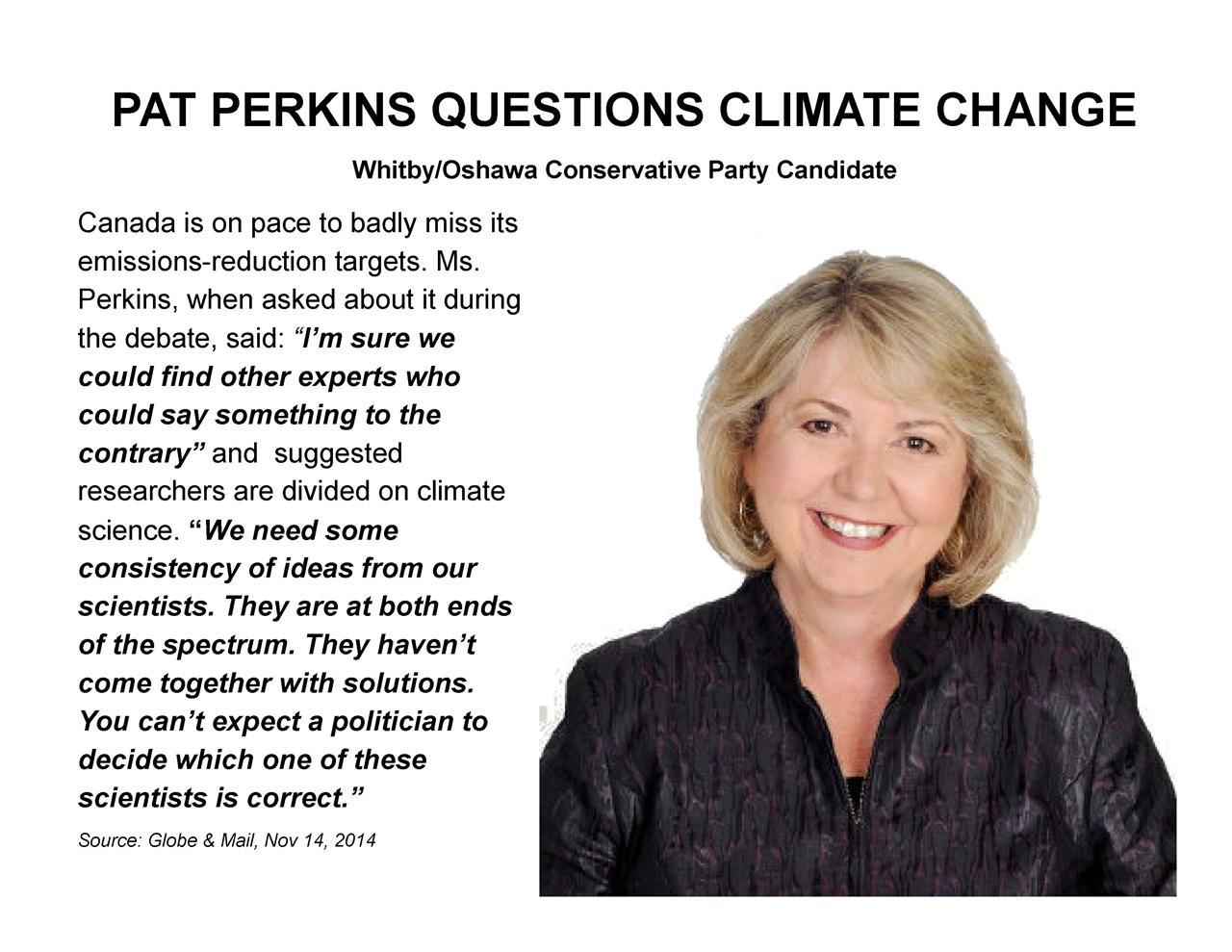
Whitby-Oshawa Conservative candidate Pat Perkins questions science on climate change
So Pat Perkins is willing to spend thousands of your tax dollars to fly herself out to a real-estate conference in Cannes, France that by her own admission "nothing concrete" has come out of, but she isn't willing to listen to scientists on climate change?
Whose priorities do you think she'll listen to in Ottawa, the residents of Whitby-Oshawa, or Stephen Harper?
Labels:
by-elections,
climate,
climate change,
pat perkins,
science,
whitby-oshawa
Friday, October 31, 2014
Dean Del Mastro guilty on election charges
Del Mastro was Harper's former Parliamentary Secretary. So much for judgement, eh?
Del Mastro could possibly resign his seat, triggering a by-election in Peterborough.
Labels:
dean del mastro,
peterborough,
stephen harper
Monday, October 6, 2014
Why I'm supporting Alvin Tedjo for Mississauga Ward 2
I haven't had too much opportunity to blog lately, but it certainly hasn't been as a result of not being politically active - indeed, I've been working every day for the past month or so helping run the campaign of Alvin Tedjo, who is running for City Council in Mississauga's Ward 2.
I haven't written too much about municipal political on this blog since I started writing it all the way back in 2007, but I am making an exception, because Alvin is an exceptional candidate.
This municipal election is the most important Mississauga has faced in a generation. Mayor Hazel is retiring, and so is Pat Mullin, who served as city councillor in Ward 2 for decades. It will mean a lot of change for the city, but it is also an opportunity for a new generation of leadership to emerge, and Alvin wants to be a part of that change.
He's committed to community. He's raising his family with his wife Rebecca in Sheridan Homelands, 2 kids with a 3rd on the way soon, and he's running because he wants his family, and all families in Mississauga and in the community to have the opportunity to grow, learn, work and play in a strong Mississauga. A Mississauga that expands its transit network to help commuting families spend more time at home and less time in traffic. A Mississauga that protects the valuable green space and waterfront it has, to preserve and protect Jack Darling Park and the Rattray Marsh for today and tomorrow. A Mississauga with great community infrastructure like parks, playgrounds and paths, so all families can enjoy community space and come together as a community.
And he's got the experience to get the job done, having worked with the City for several years as a training and development consultant and most recently, serving as Senior Policy Advisor to the Minister of Training, Colleges and Universities in Ontario's Liberal government.
With election day just a few weeks away, if you live in Ward 2 (Clarkson, Sheridan Homelands, and Lorne Park), I hope you will support Alvin!
Wednesday, September 3, 2014
Donna Tiqui-Shebib for OWLC President
Now, I will preface this by saying that obviously I won't be able to vote for Donna, but I encourage all Liberal women attending the LPCO convention to support Donna Tiqui-Shebib for OWLC President. Donna has been a very strong supporter of local Young Liberals, and has the political experience and community background to be an excellent President for the Commission and keep it moving forward.
Thursday, August 21, 2014
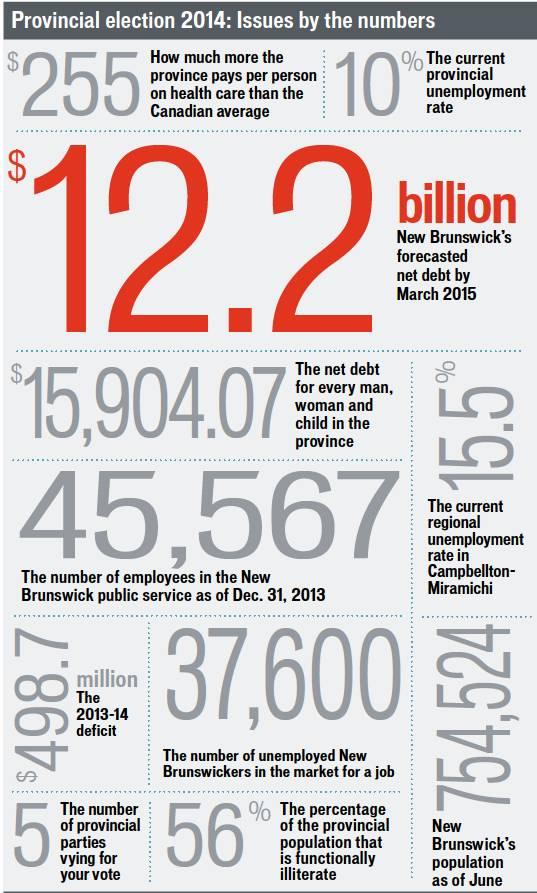
New Brunswick Conservative's pull out of leaders debate - don't want to talk about the David Alward record?
Labels:
conservatives,
david alward,
elections,
new brunswick,
saint john
Tuesday, July 29, 2014
"Limiting information" on oilsands probe demonstrates Harper government problems with both openness and the environment
This story out of The Star hits at two major problems of the Harper government - an inability to take environmental concerns seriously, and a desire to limit access to critical information by the media and citizens.
"Environment Canada’s enforcement branch asked a spokesman to “limit information” given to reporters about how long it took to launch a federal investigation into a serious Alberta oilsands leak last summer.
The comments were included in more than 100 pages of emails obtained by the Star that were generated in response to questions from journalists last summer about the mysterious leak in Cold Lake, Alta., that now totals about 1.2 million litres of bitumen emulsion, a mixture of heavy oil and water.
The incident itself was not publicly disclosed until a report by the Star in July 2013. More than 100 animals died near the site of the spill, which continues to release heavy oil above the surface, one year later....
Liberal environment critic John McKay said the case seems to be another example ofHarper’s government favouring one industrial sector over others, while attempting to keep news about spills and environmental damage “secret” for as long as possible.
“It is upsetting that the Harper government’s lack of transparency and disregard for our wildlife, water and environment is something we have come to expect,” said McKay, who represents Scarborough-Guildwood in Parliament."
It is absolutely critical to develop Canada's and Alberta's natural resources in a responsible way to help grow the economy. But stories such as these do nothing to help the Harper government's reputation as uncaring towards the environment, which has had a significantly negative impact on Canada's trade relations with the United States and the ability to market Canada as a responsible energy power. Canada will not see it's full economic potential from natural resources until we have a government that doesn't see the economy and the need for strong environmental regulations and social licences as enemies, but as complimentary to ensure prosperity for all Canadians.
Labels:
alberta,
economy,
environment,
harper,
john mckay,
oil,
oil sands
Monday, July 14, 2014
CBC article on Ontario budget mentions my youth voter registration policy
Yes, this is shameless self-promotion on my part, but hey, my Mom thought it was cool:
"The Liberals also plan to revamp the Grade 10 Civics curriculum to get students more involved in their communities and introduce voter registration in high schools."
Labels:
civics,
education,
policy,
voting,
young liberals
Saturday, July 5, 2014
What can the results of the last Ontario PC leadership race tell us about the current one? That Elliott could be hard to beat
Long-time readers will remember when I did some fairly in-depth coverage of the 2009 Ontario PC leadership race. I was reading over some blog posts from that era, bit of a trip down memory lane. I kind of forgot Hudak's big selling point to grassroots conservatives was pledging to eliminate Human Rights Tribunals, Christine Elliott running on a flat tax to increase her appeal beyond just red Tories, and of course Hudak Bingo!
The map at the top of this post shows the first round results from the 2009 leadership results, coloured in by which candidate won plurality support in each riding. As a reminder, the PC's used a weighted one member one vote system, so every riding had equal support, from Conservative strongholds in rural Ontario to weak seats in downtown Toronto that even during a leadership race might only have a few dozen members. Hudak is in dark blue, Klees is in light blue, Elliott in green, Hillier in red. You can expand the map by clicking on it.
So, looking at these results, (and my analysis from 2009) what can we learn from the 2009 race that might be applicable to the current Ontario PC race?
- Elliott, the presumptive front-runner has an advantage in the 905/416, since no other serious candidate from the area seems likely to enter the race. Looking at the results from 2009, Frank Klees was very successful in signing up new members from cultural communities in the 905, as he dominated Peel region, his home York region, and the suburbs of Toronto. Elliott did well in most of the downtown core and her home base of Durham region, but was unable to make gains in a lot of the inner 905 belt. With no other serious candidate likely to emerge from Toronto/905, Elliott could dominate much of the GTA, which would go a long way to help establish her front-runner credentials
- Breaking into the GTA will be the challenge for any of the other potential candidates, who would all have somewhat of a regional base, but would likely have to dominate their home bases. Lisa Macleod, Vic Fedeli and Monte McNaughton would have home bases in the East, North and Southwest respectively. Now, in 2009 Tim Hudak was able to win the leadership without doing particularly well in the GTA (he won a few scattered seats and split Halton region with Elliot) because in large part he dominated his home base of Niagara/Southern Ontario, but he also had strong results in Northern Ontario and in more rural ridings across the other parts of the province as well. Having favourite sons/daughters from each of the North, Southwest and East could make it difficult for any of them to establish province-wide movements, although I could see Lisa Macleod, who has toured the province pretty extensively and has been fairly high profile as opposition MPPs go being perhaps best suited to pull it off.
- If Macleod might be the strongest candidate against Elliott, she'll have to take some caution from looking at these maps. Presumably she would be the Eastern Ontario favourite daughter, and that means she would need to build a coalition of PC supporters ranging from downtown Ottawa moderates to Randy Hillier supporters from the rural areas. Macleod might have to tack to the right both to rally the non insignificant numbers of very conservative conservatives in Eastern Ontario, but also to try and establish a solid Blue Tory vs. Red Tory match-up against Elliott to establish her credentials as the main right-of-Elliott candidate.
- Monte McNaughton, who could be a Southern/Southwestern Ontario favourite son was also a champion of right-to-work legislation that caused Hudak some headaches but also could endear him to the more conservative minded activists who are important in leadership races. With Monte needing to dominate Southwestern Ontario to establish himself as a legitimate contender, and Macleod needing to target rural Southwestern conservatives to establish herself as the main right-wing contender against Elliott, the membership sign up and organizational battles that could happen between Macleod and McNaughton in that part of the province could be interesting
- With that in mind, Elliott has the clearest path to victory: Dominate the GTA, and hold her own in other parts of the province. MPP endorsements don't mean everything (MPP endorsements can have a pretty big range of importance on the local membership base, sometimes big, sometimes not so much) but that she has endorsements already from MPPs from her home competitors bases (Norm Miller from Northern Ontario, Todd Smith from Eastern Ontario, Jeff Yurek and Michael Harris from the Southwest amongst others) bodes well.
Thursday, July 3, 2014
Joe Cressy: "[the next election] is going to won or lost based on seats where you’re taking on Tories." I agree, so let's check the numbers
This graph has been making the rounds on social media to show growing support for the federal Liberals in by-elections across Canada, including Trinity-Spadina, where I was happy to do a bit of volunteering for Adam Vaughan.
Speaking of Trinity-Spadina, I've quoted NDP candidate Joe Cressy above from this article where the NDP tries to spin the rather negative by-election results it's had under Mulcair.
Cressy's full quote is:
“The next federal election will not be won or lost on the basis of a couple of seats in Canada where it’s the Liberals and the NDP squaring off. Rather, it’s going to won or lost based on seats where you’re taking on Tories,” Cressy said.
“The focus has to be and should be on taking out Harper, not focusing on the Liberals.”
So, with that in mind, why don't we actually look at the vote changes from the 2011 elections in by-elections in Conservative held seats since the last election?
Calgary Centre
NDP: -11%
Lib: +15
Con: -21%
Liberal vote shoots up 15%, to make the Calgary Centre by-election the best Liberal result in Calgary since 1997, as the Tory vote goes way down and the NDP vote declines by 11%, as they get less than 4% of the vote.
NDP: +5%
Lib: -1%
Con: -4%
Congrats NDP, you managed to increase your vote by 5% (still finishing 24% behind) during a by-election held when the federal Liberals were leaderless and the provincial Liberals were in the middle of a leadership race leaving the local campaign short of volunteers. Worth noting the provincial Liberals would go on to win the seat in the Ontario election, with the NDP back in third.
So those two by-elections were held when Mulcair was leader, but the Liberals were still without a permanent leader. Let's see what happens when Trudeau becomes leader:
NDP: -1
Lib: +9%
Con: -7%
The NDP vote dips slightly, but the Trudeau Liberals shoot up almost 10% and actually take a seat back from the Harper Conservatives.
NDP: -10
Lib: +23%
Con: -12%
In the ultra safe Conservative Provencher seat, the Liberal vote goes up by 23%, as the NDP vote crashes 10%, finishing with a deposit-losing 8.2% of the vote.
NDP: -18%
Lib: +37%
Con: -20%
Grit vote sky-rockets as a Justin Trudeau-led Liberal Party goes from 4th place and 5% to coming within a few hundred votes of winning the riding. NDP vote absolutely craters to 7% for another lost deposit - despite the NDP holding one of the Brandon seats provincially for decades.
NDP: -6%
Lib: 13+%
Con: -9%
Another ultra-safe Conservative seat to be sure, but the Liberal vote share goes from less than 4% to 17%, while the NDP barely finishes ahead of the Christian Heritage Party for 4th place - Mulcair's NDP candidate only 3 votes ahead of the CHP with 4.2% of the vote.
NDP: -2
Lib: 25%
Con : -25%
Not quite the nail-biter as Brandon-Souris, but Liberal candidate Kyle Harrietha pulls in a solid 35% of the vote on a 25% increase, the best Liberal result in the riding since 1968. NDP at least manages to hang onto it's deposit this time (a rarity with Mulcair as leader in Tory held ridings as we've seen) but the NDP does decline.
So what does that leave us then, when looking at the seats where the Liberals and NDP are going up against the Tories?
Monday, June 16, 2014
Assorted thoughts from the ground from a Liberal majority
Well, having had a few days to think about it, I had some scattered thoughts about the Ontario political scene in the aftermath of a Wynne majority government. I am so happy to have played a small part in it in York South-Weston. In no particular order, here are some things that have I've been thinking about since the election, with one point largely about each party.
"Jobs Not Cuts" was a simple but effective slogan the Liberal campaign was quick to start using to hammer Hudak once he announced he would be cutting 100,000 public service jobs as part of his platform. Balancing the deficit and bringing down the debt is important, as Kathleen Wynne and Charles Sousa have stated many times, but Ontario can't afford to put people out of work and slash public services just to bring the budget to balance a year earlier, as Hudak promised. Liberals were able to tell a good message: vote Liberal, and you'll have a government that protects health care and education as well as protecting good paying jobs that help the economy. This will benefit you and your family. Vote Hudak, and you'll have a government that slashes services that impact your family, with no immediate benefit in your everyday life. Hudak's math errors in the "Million Jobs Plan" didn't help his economic credibility, neither did his attacks on "corporate welfare" while praising companies that had in fact partnered with governments (including Harper's Conservatives) to create jobs. And speaking of Harper...
Paul Wells, while explaining why he supported the PC's in this election explores some of the difference between Hudak's conservative pitch this election which failed pretty spectacularly, and Stephen Harper's conservative pitch, which won him a majority largely based on the kind of seats Hudak either failed to win from the Liberals or actually lost to the Liberals:
"Hudak, on the other hand, had to keep impressing the Ayn Rand League, thanks largely to his ever-shaky command of the party’s leadership. That’s why he put a big number on his public sector job-cut target, because he decided his target audience was people who think eliminating public sector jobs is always excellent. Compare and contrast: During the 2011 federal election, I worked hard to get a succession of federal Conservatives — Jim Flaherty, John Baird — to give me any indication of the scale of public sector job cuts the Harper government had in mind...
Nobody seriously doubts Stephen Harper is a conservative, so he can tell conservatives they have to wait. That’s why I saw Alison Redford’s Alberta Conservative victory over Danielle Smith’s Wildrose party as a vindication of the Harper style, even though a lot of Harper Conservatives supported Wildrose: because politics isn’t about scratching your swollen id. Harper’s conservatism is a broad and not always internally coherent coalition, and it spends a lot of time wondering when something exciting will happen. "
Stuff like this is also at the core of Wells' The Longer I'm Prime Minister, basically arguing that Harper can afford politically to not govern as a Reform Party conservative because as long as it keeps delivering electoral results, the base will more or less be happy. Harper's relative moderation and embrace of economic interventionism allowed him to campaign to a majority in 2011 with a message to Ontario voters that he could be trusted on the economy because he wasn't radical, had created jobs, etc. Hudak instead campaigned on an unabashed vision of shrinking government that Harper has largely abandoned in the successful pursuit of electoral gain. Quite simply, the coalition of voters that would support Hudak's hard-right, fiscal hawkishness simply isn't big enough to form government, and Hudak's assumptions that his own base would turn out were swamped by moderates who were turned off enough by his platform to get out to vote against him.
- People judge governments economic credentials and reliability based on job creation, not being deficit hawks for the sake of deficit hawking
"Jobs Not Cuts" was a simple but effective slogan the Liberal campaign was quick to start using to hammer Hudak once he announced he would be cutting 100,000 public service jobs as part of his platform. Balancing the deficit and bringing down the debt is important, as Kathleen Wynne and Charles Sousa have stated many times, but Ontario can't afford to put people out of work and slash public services just to bring the budget to balance a year earlier, as Hudak promised. Liberals were able to tell a good message: vote Liberal, and you'll have a government that protects health care and education as well as protecting good paying jobs that help the economy. This will benefit you and your family. Vote Hudak, and you'll have a government that slashes services that impact your family, with no immediate benefit in your everyday life. Hudak's math errors in the "Million Jobs Plan" didn't help his economic credibility, neither did his attacks on "corporate welfare" while praising companies that had in fact partnered with governments (including Harper's Conservatives) to create jobs. And speaking of Harper...
- Hudak ran on a hard-right platform that was designed to fire up his base...it ended up firing up moderate voters to vote against him en masse
Paul Wells, while explaining why he supported the PC's in this election explores some of the difference between Hudak's conservative pitch this election which failed pretty spectacularly, and Stephen Harper's conservative pitch, which won him a majority largely based on the kind of seats Hudak either failed to win from the Liberals or actually lost to the Liberals:
"Hudak, on the other hand, had to keep impressing the Ayn Rand League, thanks largely to his ever-shaky command of the party’s leadership. That’s why he put a big number on his public sector job-cut target, because he decided his target audience was people who think eliminating public sector jobs is always excellent. Compare and contrast: During the 2011 federal election, I worked hard to get a succession of federal Conservatives — Jim Flaherty, John Baird — to give me any indication of the scale of public sector job cuts the Harper government had in mind...
Nobody seriously doubts Stephen Harper is a conservative, so he can tell conservatives they have to wait. That’s why I saw Alison Redford’s Alberta Conservative victory over Danielle Smith’s Wildrose party as a vindication of the Harper style, even though a lot of Harper Conservatives supported Wildrose: because politics isn’t about scratching your swollen id. Harper’s conservatism is a broad and not always internally coherent coalition, and it spends a lot of time wondering when something exciting will happen. "
Stuff like this is also at the core of Wells' The Longer I'm Prime Minister, basically arguing that Harper can afford politically to not govern as a Reform Party conservative because as long as it keeps delivering electoral results, the base will more or less be happy. Harper's relative moderation and embrace of economic interventionism allowed him to campaign to a majority in 2011 with a message to Ontario voters that he could be trusted on the economy because he wasn't radical, had created jobs, etc. Hudak instead campaigned on an unabashed vision of shrinking government that Harper has largely abandoned in the successful pursuit of electoral gain. Quite simply, the coalition of voters that would support Hudak's hard-right, fiscal hawkishness simply isn't big enough to form government, and Hudak's assumptions that his own base would turn out were swamped by moderates who were turned off enough by his platform to get out to vote against him.
- Horwath tried to expand her voter coalition a step too far, and while she made gains in some parts of the province, lost others
Looking at how much NDP results in Toronto fell, the letter that some NDP stalwarts send to Horwath mid-campaign can't be judged as something trivial - plenty of traditional NDP supporters in Toronto
Sunday, May 25, 2014
My policy on improving civic education makes the Ontario Liberal Party platform!
Readers of this space will remember my policy on youth voter registration that was passed as a priority policy at the Ontario Young Liberals Summer Fling last year. The policy was also debated on Common Ground platform building discussion site where it became one of the top ranked policies in the education section.
Today, I am very proud to say my policy has been adopted as a part of the Ontario Liberal Party platform!
"ENGAGING OUR YOUTH.
We will introduce voter registration in high schools to help students prepare for the responsibilities of citizenship and replace the Grade 10 Civics curriculum with a more hands-on course that includes a community improvement project."
Thanks to everyone who supported my policy at every step of way!
Labels:
civics,
education,
ontario liberals,
oyl,
platform,
policy,
summerfling
Saturday, May 10, 2014
Is Andrea Horwath for real?
That's what the new Kathleen Wynne ad asks Ontarians after Horwath said NO to an increased child benefit, an Ontario Pension Plan, better transit, and a new job creation strategy for Ontario. I'm really digging the "I'm Kathleen Wynne and I stand behind this message" tag the Premier has been using.
I'm sure NDP'ers will complain about "going negative", to which I have to ask, isn't joining with Tim Hudak and Stephen Harper and saying NO to a strong plan for Ontario a tad more negative?
Labels:
andrea horwath,
elections,
kathleen wynne,
liberals,
ndp,
ondp,
ontario election,
ontario liberals,
ontario ndp
Subscribe to:
Posts (Atom)